

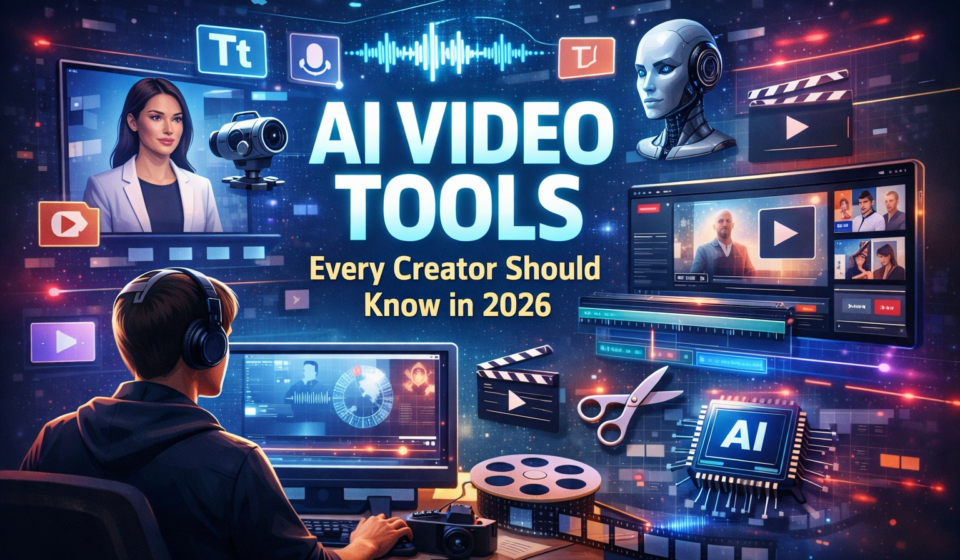

Video content continues to dominate the internet, and in 2026, artificial intelligence has become a core part of how creators produce videos. What once required expensive equipment, editing skills, and long hours can now be done faster, cheaper, and sometimes automatically. From YouTubers and Instagram creators to marketers and educators, AI video tools are reshaping content creation at every level.
Table Of Content
- Why AI Video Tools Matter More Than Ever
- Text-to-Video Tools: Turning Ideas Into Videos Instantly
- AI Avatar & Presenter Tools
- AI Voice & Dubbing Tools
- AI Video Editing & Smart Enhancements
- AI Video Generation & Visual Effect
- AI Tools for Short-Form Content Creators
- What Creators Should Focus On in 2026
- Conclusion
This article breaks down the most important AI video tools and categories every creator should know in 2026 — and why they matter.
Why AI Video Tools Matter More Than Ever
Audience demand for video is growing, but attention spans are shrinking. Creators are under constant pressure to publish faster, stay consistent, and adapt to multiple platforms. AI video tools solve this problem by automating time-consuming tasks such as scripting, editing, voiceovers, and even visual generation.
In 2026, AI is no longer a “nice to have” feature. For many creators, it is the difference between staying relevant and falling behind.
Text-to-Video Tools: Turning Ideas Into Videos Instantly
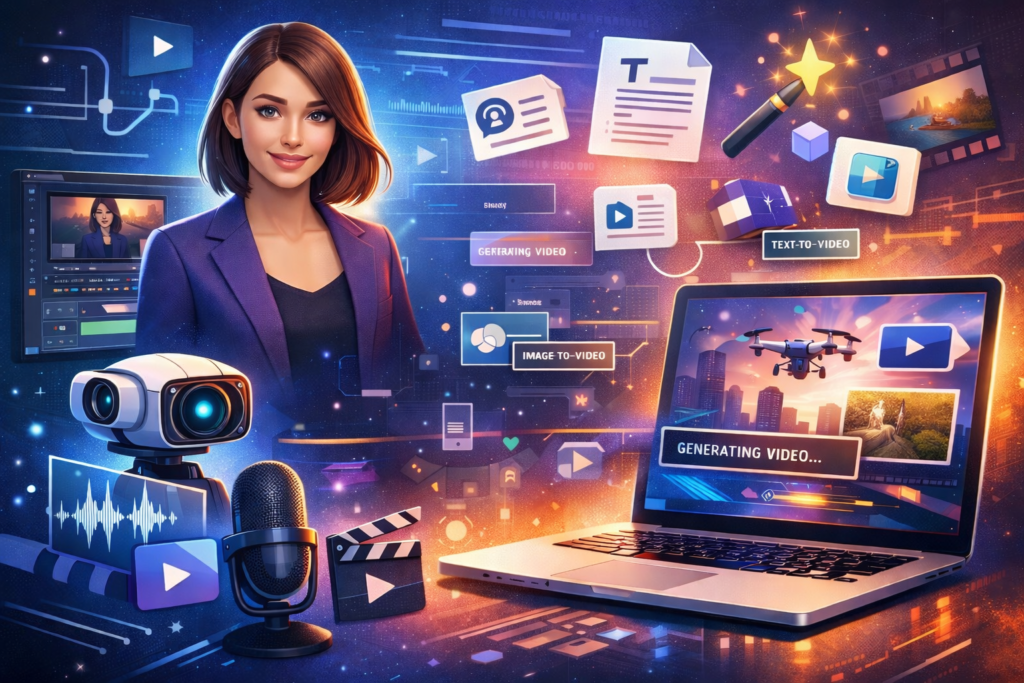
Text-to-video tools allow creators to generate complete videos from a written script or prompt. These tools are especially popular for explainer videos, social media content, and faceless YouTube channels.
Platforms like Pictory and InVideo convert text into scenes, add stock visuals, captions, and background music automatically. They are ideal for creators who focus on ideas and storytelling rather than manual editing.
In 2026, these tools are widely used for blogs-to-video conversion, short-form reels, and quick educational content.
AI Avatar & Presenter Tools
AI avatar tools allow creators to generate videos featuring realistic digital presenters without appearing on camera. This has become a major trend for business content, online courses, and informational videos.
Tools such as Synthesia enable users to create videos with human-like avatars that speak multiple languages. This is especially useful for creators who want professional-looking videos without filming equipment or studio setups.
In 2026, AI presenters are widely accepted, especially in corporate, training, and explainer content.
AI Voice & Dubbing Tools
Voice quality plays a huge role in video engagement. AI voice tools now offer natural-sounding narration that rivals human voiceovers.
Platforms like ElevenLabs are widely used for YouTube narration, podcasts, and audiobooks. These tools also support multilingual dubbing, allowing creators to reach global audiences without re-recording content.
By 2026, AI voiceovers are standard practice for faceless content and automation-based channels.
AI Video Editing & Smart Enhancements
Editing used to be one of the most time-consuming steps in video creation. AI has simplified this by automating cuts, transitions, subtitles, and visual improvements.
Tools such as Runway and Descript help creators remove silences, fix mistakes, enhance visuals, and even edit videos by editing text transcripts.
In 2026, smart editing tools allow solo creators to produce content at studio-level speed.
AI Video Generation & Visual Effect
Generative AI has taken video creation a step further by generating visuals directly from prompts. These tools are still evolving but are already being used for creative projects, ads, and experimental content.
Platforms like Runway Gen‑2 allow creators to generate short video clips from text descriptions. While not a replacement for traditional filming yet, these tools are opening new creative possibilities.
In 2026, generative video is becoming a powerful supplement to traditional footage.
AI Tools for Short-Form Content Creators
Short-form video dominates platforms like Instagram Reels, YouTube Shorts, and TikTok. AI tools now help creators repurpose long videos into multiple short clips automatically.
These tools identify highlights, add captions, format videos vertically, and optimize them for social platforms. This allows creators to maintain presence across platforms without doubling their workload.
In 2026, repurposing content with AI is one of the smartest growth strategies for creators.
What Creators Should Focus On in 2026
AI tools are becoming more powerful, but creators still need to focus on clarity, originality, and audience connection. Tools can automate production, but ideas and authenticity remain human strengths.
The most successful creators in 2026 are not those who use AI blindly, but those who use it strategically — saving time on execution while focusing more on creativity and storytelling.
Conclusion
AI video tools are no longer experimental. In 2026, they are essential tools for anyone serious about content creation. Whether you are a solo YouTuber, an educator, a marketer, or a faceless content creator, understanding and using these tools can dramatically improve efficiency and reach.
The future of video creation belongs to those who adapt early, experiment smartly, and use AI as a creative partner rather than a replacement.